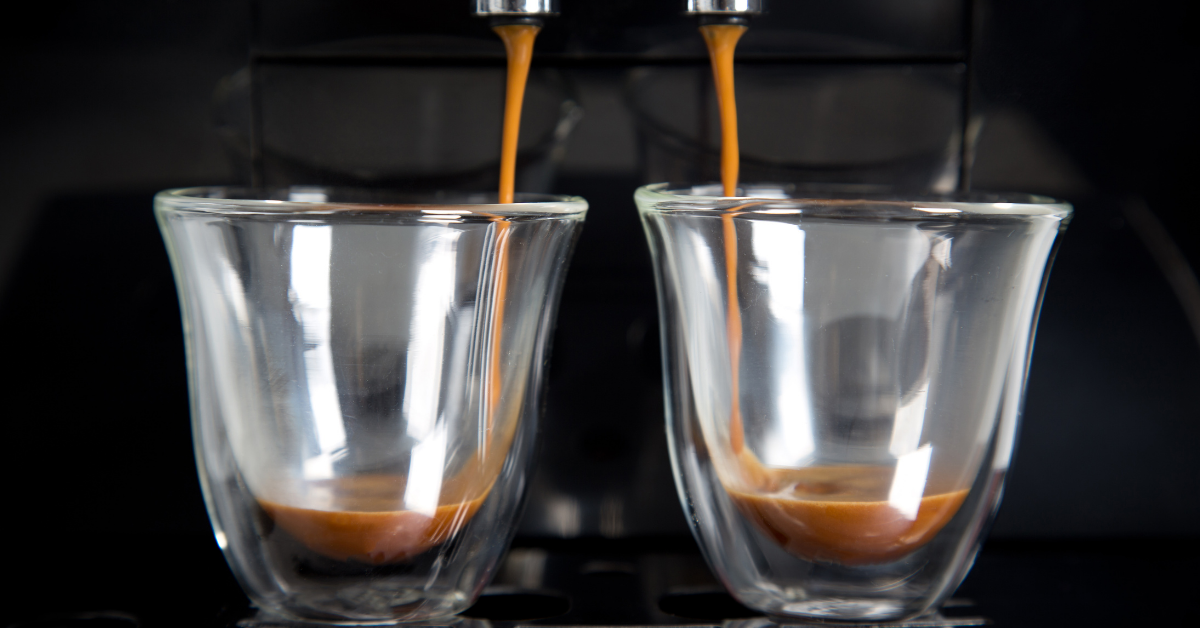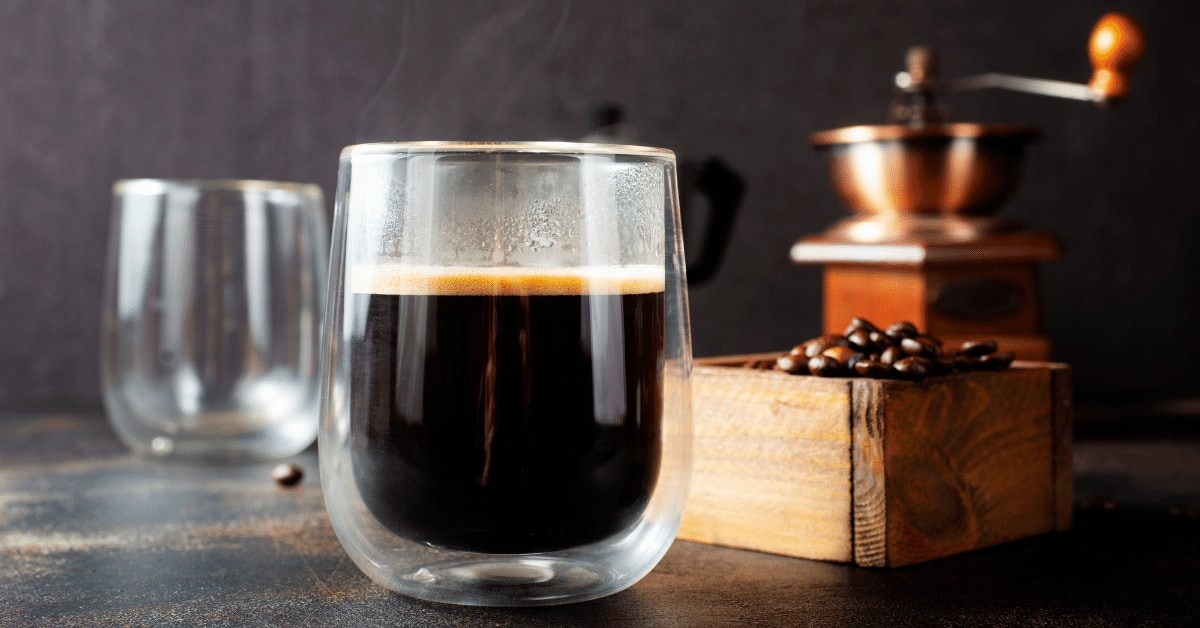
An Americano is espresso diluted with hot water. It contains two ingredients—espresso and water—and tastes like a longer, lighter-bodied espresso while retaining the roast character and aroma of the shot.
A common starting point is one part espresso to two parts hot water, but cafés vary the shot count and water volume by drink size. The water changes the strength and volume, not the amount of caffeine already present in the espresso.
What Is in an Americano?
| Ingredient | Typical amount | What it contributes |
|---|---|---|
| Espresso | 1–2 shots | Coffee flavor, aroma, body and caffeine |
| Hot water | About 2–4 oz per shot | More volume and lower concentration |
There is no milk or sweetener in a standard Caffè Americano, though you can add either. Starbucks, for example, lists only water and brewed espresso as the ingredients in its current Americano.
Americano Ratio and Size
Start with a 1:2 espresso-to-water ratio: one 1-ounce espresso shot plus about 2 ounces of hot water. For a larger drink, use a double shot with roughly 4–6 ounces of water. Add less water for a bolder cup or more for a gentler one.
The Specialty Coffee Association’s heritage definition places a single espresso at about 25–35 ml (0.85–1.2 oz). Café recipes are not standardized, so an Americano’s final size and number of shots can differ considerably. Check the menu rather than assuming every 12- or 16-ounce Americano contains the same dose.
What Does an Americano Taste Like?
An Americano tastes like diluted espresso: aromatic and roast-forward, with less intensity and a thinner body than a straight shot. The exact flavor depends on the beans and extraction. A lighter espresso can taste bright and citrusy; a darker one may lean toward chocolate, caramel or toasted notes.
It can resemble black drip coffee in color and serving size, but it does not taste identical. Espresso is concentrated under pressure and typically carries more texture and sometimes crema; drip coffee is brewed through a filter with a much higher water-to-coffee ratio.
Americano vs. Other Black Coffees
| Drink | How it is made | Typical character |
|---|---|---|
| Americano | Espresso plus hot water | Longer espresso flavor; adjustable strength |
| Drip coffee | Water passes through coffee in a filter brewer | Cleaner profile; no espresso crema |
| Long black | Espresso poured over hot water | Often smaller and more espresso-forward, though café definitions vary |
| Lungo | More water runs through the grounds during the espresso extraction | Longer extraction, not an espresso diluted afterward |
| Black coffee | Any coffee served without milk or cream | An umbrella term, not one brewing method |
Americano vs. Long Black
The two drinks use the same basic ingredients, and their names are not applied consistently worldwide. A long black is commonly made by pouring espresso over a smaller amount of hot water, which helps preserve more crema and creates a stronger-tasting drink. An Americano is often longer and may be assembled espresso-first, but the pour order alone is not a universal definition.
Americano vs. Drip Coffee
An Americano begins as espresso and is diluted after extraction. Drip coffee is extracted directly through a bed of grounds and a filter. Both can be black and similar in volume, but the different coffee-to-water ratios, grind sizes, pressure and filtration create different body and flavor.
Neither drink is automatically “stronger” in caffeine. Total caffeine depends on the espresso shot count or the amount and recipe of the brewed coffee. Espresso is more concentrated per ounce, while a full mug of drip coffee can contain more caffeine overall.
How Is an Americano Made?
- Pull one or two fresh espresso shots.
- Add hot water to the espresso, or pour the espresso over water if you prefer to preserve more crema.
- Taste and adjust the water rather than changing the espresso after brewing.
For exact measurements and equipment options, follow our Americano recipe. For a cold version, use the separate iced Americano guide.
Where Did the Americano Come From?
The familiar story says American soldiers in Italy diluted espresso to resemble the coffee they knew at home. It is a plausible and widely repeated explanation, but the drink’s exact origin is not firmly documented. References to an “Americano” predate World War II, so it is better treated as a popular origin story than a proven invention account.
Americano FAQ
Is an Americano just black coffee?
It is a type of black coffee, but not a synonym for all black coffee. An Americano specifically uses espresso plus water; “black coffee” can also mean drip, pour-over, French press or another coffee served without milk.
How many shots are in an Americano?
Usually one or two, with larger café sizes sometimes using more. The name does not guarantee a fixed shot count, so check the café’s recipe if caffeine matters to you.
Does an Americano have milk?
Not by default. The standard drink is espresso and water. Adding a splash of milk is a customization; a latte or cappuccino uses much more milk and has a different texture.
Is an Americano stronger than regular coffee?
It may taste more espresso-forward, but caffeine depends on the recipe. Water does not add or remove caffeine; the number of espresso shots determines the Americano’s caffeine contribution.
The Short Answer
An Americano is espresso plus hot water. Start around one part espresso to two parts water, then adjust to taste. It offers more volume than a straight shot without adding milk, while preserving the essential flavor of the espresso.
Useful Americano-Making Gear
Useful options include espresso machines, burr coffee grinders, and espresso cups.